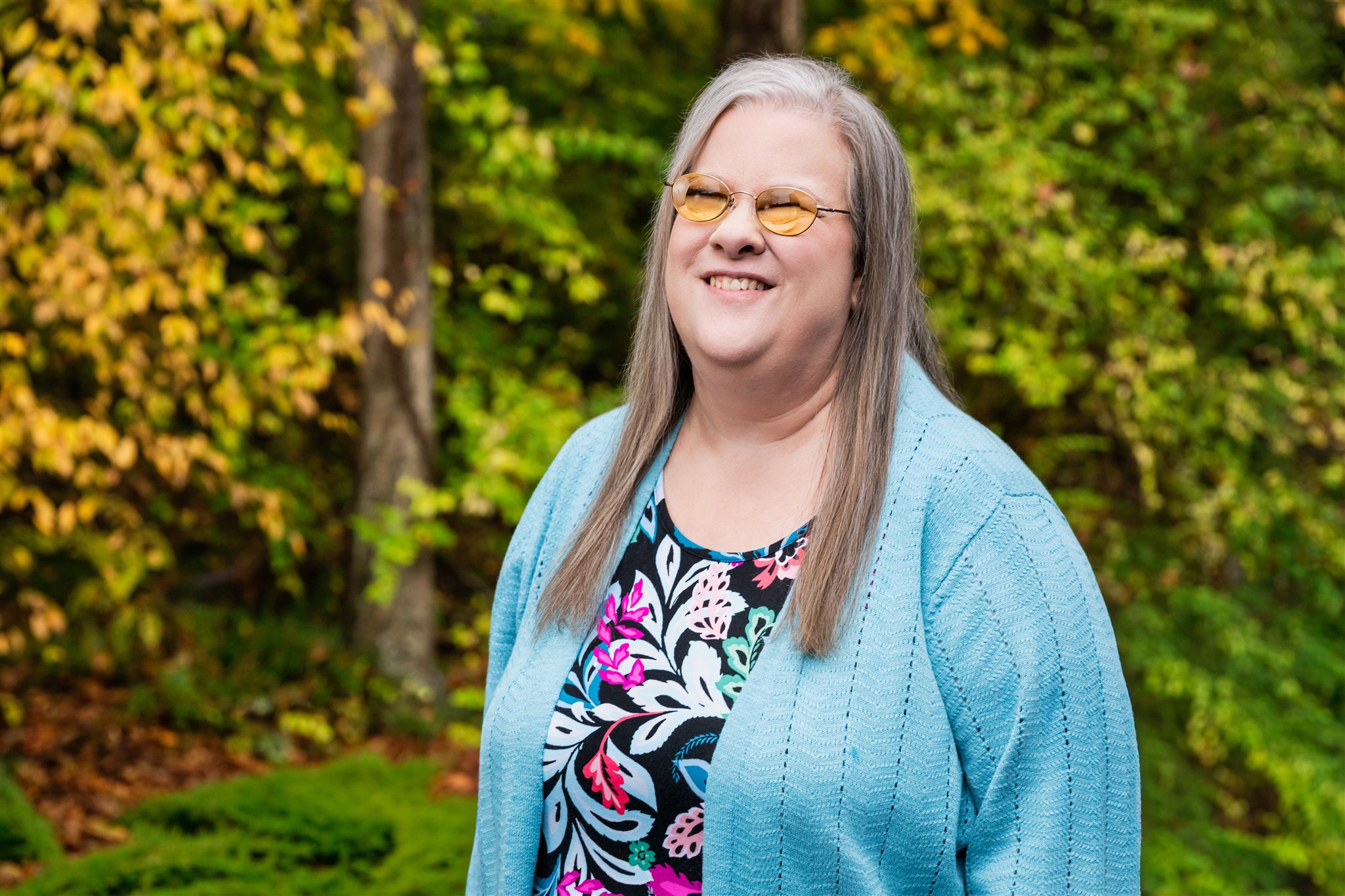
In 2011, Lauren Tuchman and I gave a presentation at the Society of Biblical Literature entitled Using Technology to Meet the Needs of Biblical Language Scholars Who Are Blind. Right click to download the presentation audio
Some developments in technology that were new at the time made great strides possible for scholars who are blind, particularly in Greek study. I summarized unmet needs at the end of the presentation. The most pressing of these concerned a way for people to use the Mac for access to biblical languages. Others concerned new codes for additional ancient languages.
Many steps forward have been made since Lauren and I presented at SBL. At the same time, Biblical language scholars have also experienced some difficulties as screen reader technology has struggled to keep pace with the development of mainstream biblical study software. This page provides a timeline of the progress that has been made and some of the challenges that have been encountered.
2009
My third-party braille table was placed online for downloade so that people could gain access to Hebrew and Greek texts via the JAWS screen reader. Logos 3 was moderately accessible with the assistance of JAWS scripts which were passed around from one blind user to another. Logos tech support reps were very helpful in referring us to each other for help.
2011
Logos 4 introduced a new interface that was largely inaccessible to screen readers. The best way for a blind user to access resources was to extract them, which meant the user could not crosslink with other resources as a sighted person could do.
2013
JAWS 13 stopped supporting Hebrew, even using my table. A version of JAWS was released in Israel, and clients were encouraged to buy this if they wanted Hebrew support. JAWS 14 supported modern Greek but did not support Hebrew. NVDA supported modern Greek but did not support Hebrew. Window-Eyes supported both languages in eight-dot braille. Mac and Iphone provided auditory support for modern Greek but no support for braille in Greek and no support for Hebrew.
The United States adopted the Unified Englesh Braille Code, which other countries had already adopted. Ultimately this changed the ways that books were transcribed, leading to some changes for older readers.
2014
JAWS 16 provided support for right to left languages but users needed to request it. Yosemite on the Mac provided support for Hebrew. A group of blind scholars including myself, Matt Yeater, and Ray McAllister began to work toward development of new braille tables to represent ancient languages like Syriac, Coptic and Akkadian, which had never been represented in braille. David Holladay and Caryn Navy from Duxbury Systems developed the Biblical Original Languages template to support these languages and make it possible to translate multilingual documents.
In an effort to counter the problem of lack of access to biblical studies texts, Ray McAllister has submitted a large library of digital braille format resources to the Bartimaeus Alliance of the Blind.
2023
Logos and Concordance apps on IOS seem to be accessible. PC access remains problematic.
2026
I expect that steps will continue to be made back, forward, back and forward as mainstream technology moves ahead, assistive technology catches up, and the cycle repeats over time. I hope that as more people become aware of the work that scholars themselves are doing, these steps will be more friendly toward access.
A solution to provide access to Hebrew, Greek, Syriac, Coptic, Akkadian, and Ugaritic is now available via the LibLouis software, which feeds all screen readers and many notetaking devices. It offers the ability to select between U.S. and European systems, thus giving users flexibility in how they read ancient texts. This is a major breakthrough in braille access. We would still like to see the ability to choose pronunciation schemes, not only voices.